
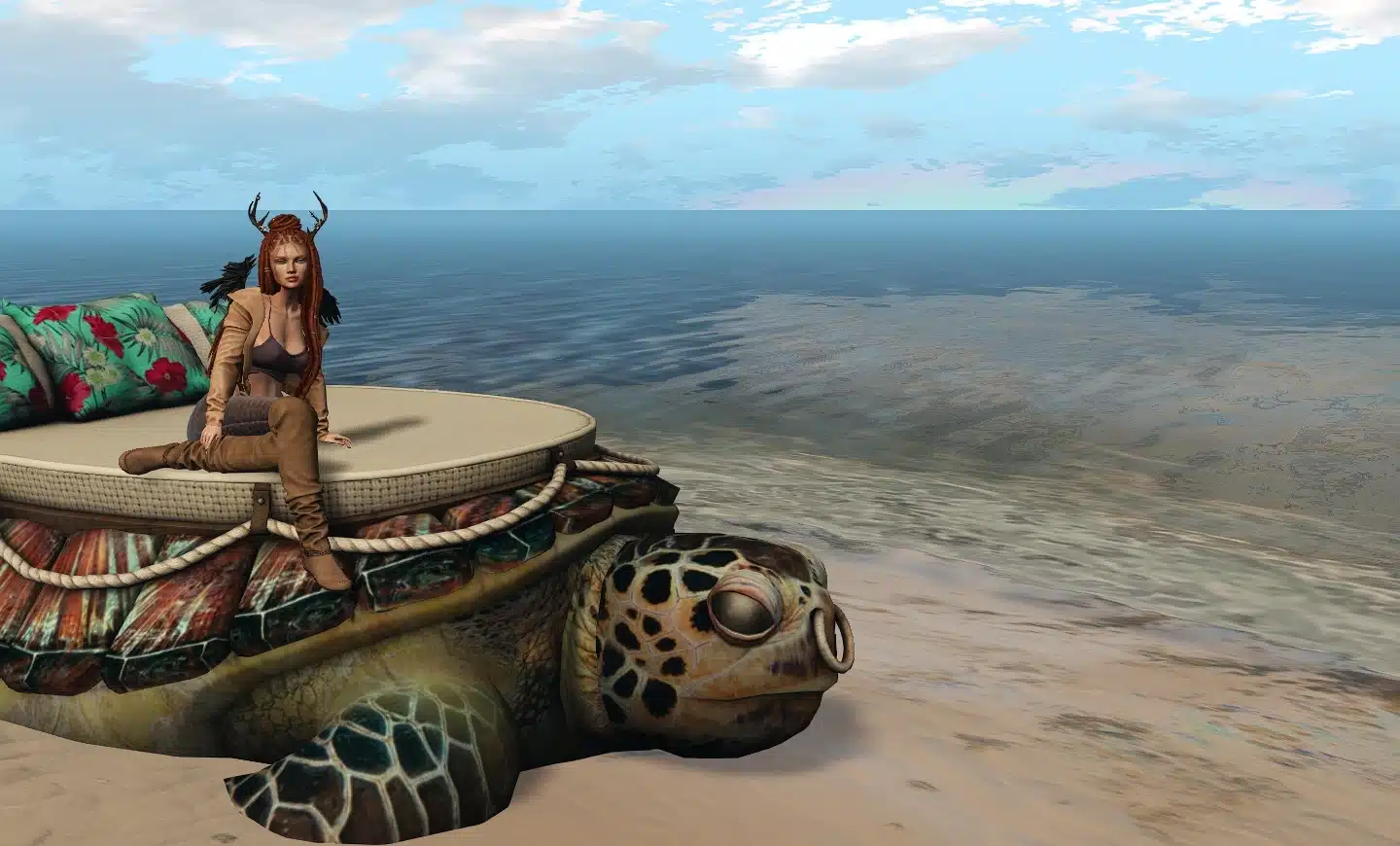
There’s a moment that happens in Second Life when it stops feeling like software.
Not all at once. Not dramatically.
It happens slowly—through familiarity. Through places you return to. Through people you begin recognizing across regions, galleries, music venues, sailing routes, beaches, forests, and late-night conversations.
And at some point, without really noticing when it happened, the world begins to gather memory.
That’s what continues to fascinate me about Second Life after all these years. Beneath the avatars, landscapes, and technology is something deeply human: people creating meaning together inside a shared digital space.

A World Shaped by Its Residents
Second Life has often been described as a virtual world, a platform, a metaverse, or a game. But none of those descriptions fully capture what it becomes once you begin spending time inside it.
Because Second Life is not driven by quests, scores, or predetermined stories. It is shaped almost entirely by its residents.
People build the spaces.
People create the culture.
People decide what matters here.
Which means what matters can change—sometimes slowly, sometimes all at once.
And because of that, the world never stops evolving.
One evening you may find yourself listening to a live musician performing beside the sea while avatars dance beneath lantern light. Another day you might wander into a surrealist art installation suspended high in the sky, or discover a tiny roadside café someone built simply because they wanted the world to feel more alive.
Some places become destinations.
Others become homes.

Communities That Make the World Feel Alive
That persistence is part of what makes Second Life remarkable.
Regions change. Communities shift. New people arrive while others quietly disappear. Yet the world continues growing through the creativity of those who remain and continue building.
I see it often in communities like Corsica South Coasters, the region I call home. Art exhibitions, sailing gatherings, music events, poetry readings, shared projects, quiet conversations — these are the things that transform digital landscapes into living places.
The technology matters, but it is the people who give the world its atmosphere.

Creativity at the Center of Everything
Creativity exists at the center of nearly everything here.
Artists build immersive environments that can only exist in virtual space. Musicians perform live to audiences scattered across the globe. Designers create fashion, architecture, animations, scripts, and objects that become part of daily life for others.
Entire businesses emerge from imagination and persistence alone.
What has always impressed me most is not simply the creativity itself, but the willingness people have to share it with one another.
More Than Just a Virtual Space
Second Life also continues to challenge the assumption that virtual spaces are somehow less meaningful than physical ones.
Friendships formed here often become lasting. Communities support one another through celebrations, hardships, collaborations, and change. People gather not because they have to, but because they genuinely want to be together.
That human connection is what gives the world its emotional weight.

Why Second Life Still Endures
Since its public launch in 2003 by Philip Rosedale and Linden Lab, Second Life has continued evolving through the creativity of its residents rather than following the traditional path of most online games.
Visual upgrades like PBR rendering have made environments more atmospheric and immersive. Mobile access is expanding how residents stay connected. New creative tools continue appearing.
Yet even as technology changes, the heart of Second Life remains surprisingly consistent: a resident-driven world shaped by imagination, community, and creative freedom.
In a digital landscape increasingly dominated by algorithms, automation, and disposable content, there is something refreshing about a world still built primarily by people who care deeply about creating spaces for others to experience.
That may be why Second Life continues to endure.
Not because it predicts the future.
But because it continues offering something many online spaces quietly lost long ago: the feeling that people are still genuinely building things together.
And perhaps that is what makes this world feel alive.
For a deeper look at the people and creativity that continue shaping Second Life, Made in SL: The Movie by Draxtor Despres offers a thoughtful resident-centered documentary created for Second Life’s 20th anniversary.
Frequently Asked Questions About Second Life
What is Second Life?
Second Life is a long-running online virtual world created by Linden Lab and launched publicly in 2003. Unlike traditional video games, it is primarily shaped by its residents, who create communities, businesses, art, events, and entire environments within the platform.
Is Second Life still active?
Yes. More than two decades after launch, Second Life continues to support an active global community centered around creativity, social connection, live events, virtual businesses, and immersive world-building.
What do people do in Second Life?
Residents explore regions, attend live music events, create art, run businesses, design fashion, participate in roleplay communities, sail, build homes, photograph landscapes, host exhibitions, and form long-term friendships and communities.
Is Second Life free?
Yes. Creating an account and exploring the world is free, though optional purchases such as land ownership, virtual goods, and premium memberships are available.
Can people make real money in Second Life?
Some residents earn real-world income by creating and selling digital products and services using the platform’s virtual currency, Linden Dollars (L$).
🦉 — Owl Dragonash


Leave a Reply