
An open virtual world shaped by people, not game play.
If you’re new here, welcome. You’re about to discover something genuinely surprising.
Second Life is a persistent online virtual world where people build, create, perform, exhibit, and gather. Happening not for a season, but over years and decades.
It is not a game with levels or objectives. There is no winning, no prescribed path, no algorithm deciding what you should do next. Instead, it functions as a shared digital environment. A place where residents design spaces from scratch, host events, form communities, and return to the same places and relationships again and again.
Through Owl’s Eye approaches Second Life as the living cultural space it truly is.This virtual world is shaped by long participation, genuine creativity, and the quiet magic of people choosing to build something together.
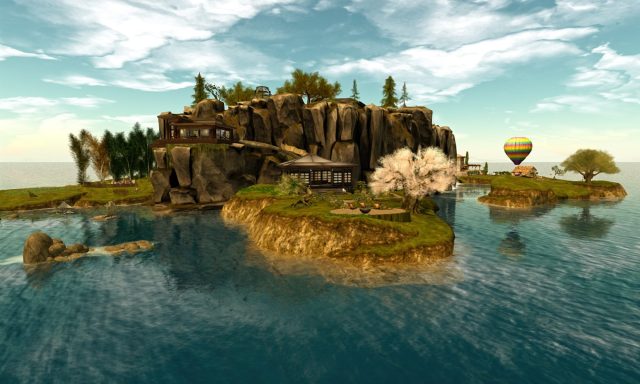
What Makes Second Life Different
Second Life is built almost entirely by its residents.
People create galleries, landscapes, clubs, theaters, shops, and homes. Artists exhibit work in three-dimensional space. Musicians perform live from their own studios, streaming directly into the world. Designers sell virtual clothing, objects, and environments through an active in-world economy. Communities form around shared interests and shared rhythms of gathering.
There are no algorithms telling you what to see next. What you encounter depends entirely on where you go, who you meet, and what you choose to spend time with.
That’s rarer than it sounds — and it’s one of the things that makes this world worth loving.
Creativity, Art, and Cultural Life
Many people arrive in Second Life looking for alternative ways to create and share work. They find far more than they expected.
Virtual galleries remove the physical limits of space. Immersive builds reshape how photography and installation are experienced. Musicians perform live to audiences gathered in shared environments, not scrolling feeds. The art here is real. The performances are real. The feeling of being in the room when something unfolds — that’s real too.
Exhibits change. Performances end. Events pass into memory. What remains is the experience of having been present.
This site documents that cultural life as it happens — and sometimes after it has settled into something more lasting.
Community and Shared Presence
Second Life is social by design and that changes everything about how it feels.
People attend events together, walk through galleries side by side, and return to the same spaces over months or years. Friendships form here that last longer than many people expect. The experience unfolds through conversation and shared attention in real time.
It is less about consuming content and more about being present with other people. That distinction matters more than it sounds.
Work, Making, and Virtual Economies
Second Life also supports one of the longest-running virtual economies in the world.
Residents buy and sell digital goods, clothing, furniture, animations, environments, and more using Linden Dollars (L$), the in-world currency. These can be exchanged for U.S. dollars through Tilia, the regulated payment system supporting the platform.
For some residents this is a hobby. For others it becomes sustained creative work. Skills like 3D modeling, texturing, scripting, photography, and world-building all have real application here and real audiences.
Creative work, community, and commerce intersect naturally in Second Life, shaped by long-term presence rather than scale or trend.
Where to Find Second Life
Second Life is developed and maintained by Linden Lab. You can learn more or create an account at the official site:secondlife.com
It’s free to join — and worth a look.
How to Join
Joining is free.
Create an account, choose or customize an avatar, and download the viewer to enter the world.
Everything written about on this site exists in-world and can be visited directly or once did, and is documented here because it mattered.
Come see for yourself.
Where to Go Next
Through Owl’s Eye documents Second Life from inside eighteen years of participation. As a resident, a community builder, a curator, and someone who still finds new things to love about this world.
A good place to start exploring:
Events — what’s happening in-world and worth showing up for
Art & Music — the creative life happening inside Second Life right now
Community — the people and places that make it a living culture
Explore SL — beautiful regions and remarkable builds across the grid
Second Life does not reveal itself all at once. It is understood through time, places, and people.
Second Life continues because people stay.
Frequently Asked Questions About Second Life
Is Second Life a game?
Not in the traditional sense — and that’s what makes it interesting. There are no levels, missions, or win conditions.
Second Life is an open virtual world where people create their own experiences: through art, music, building, community, and the kind of long-term presence that most online spaces don’t support.
What you do here is genuinely up to you.
Is Second Life free?
Yes. Creating an account and exploring the world is completely free.
Do people still use Second Life?
Yes — very much so. Second Life continues to support an active global community. Many residents have been here for years, even decades. Newcomers arrive regularly and often find something they didn’t expect to find. What keeps the world alive isn’t novelty. It’s return.
What can you do in Second Life?
Almost anything, honestly. Visit art galleries. Attend live music performances. Explore immersive landscapes built with extraordinary care. Build your own spaces. Design and sell digital goods. Join communities. Dance at a festival. Or just wander quietly and see what you find. What you experience depends on where you go — and who you meet there.
Is there a real economy in Second Life?
Yes. Residents buy and sell digital goods using Linden Dollars (L$), which can be exchanged for U.S. dollars through the platform’s regulated payment system. For some, it remains a hobby. For others, it becomes meaningful creative work.
Is Second Life still relevant?
That depends on what you mean by relevant. If you mean: are people still building, performing, gathering, and creating meaningful culture inside it — then yes, absolutely. Second Life continues because the people here choose to keep making it worth continuing. Relevance here is measured not by headlines, but by sustained presence and genuine creativity. By that measure, it’s as alive as it’s ever been.
